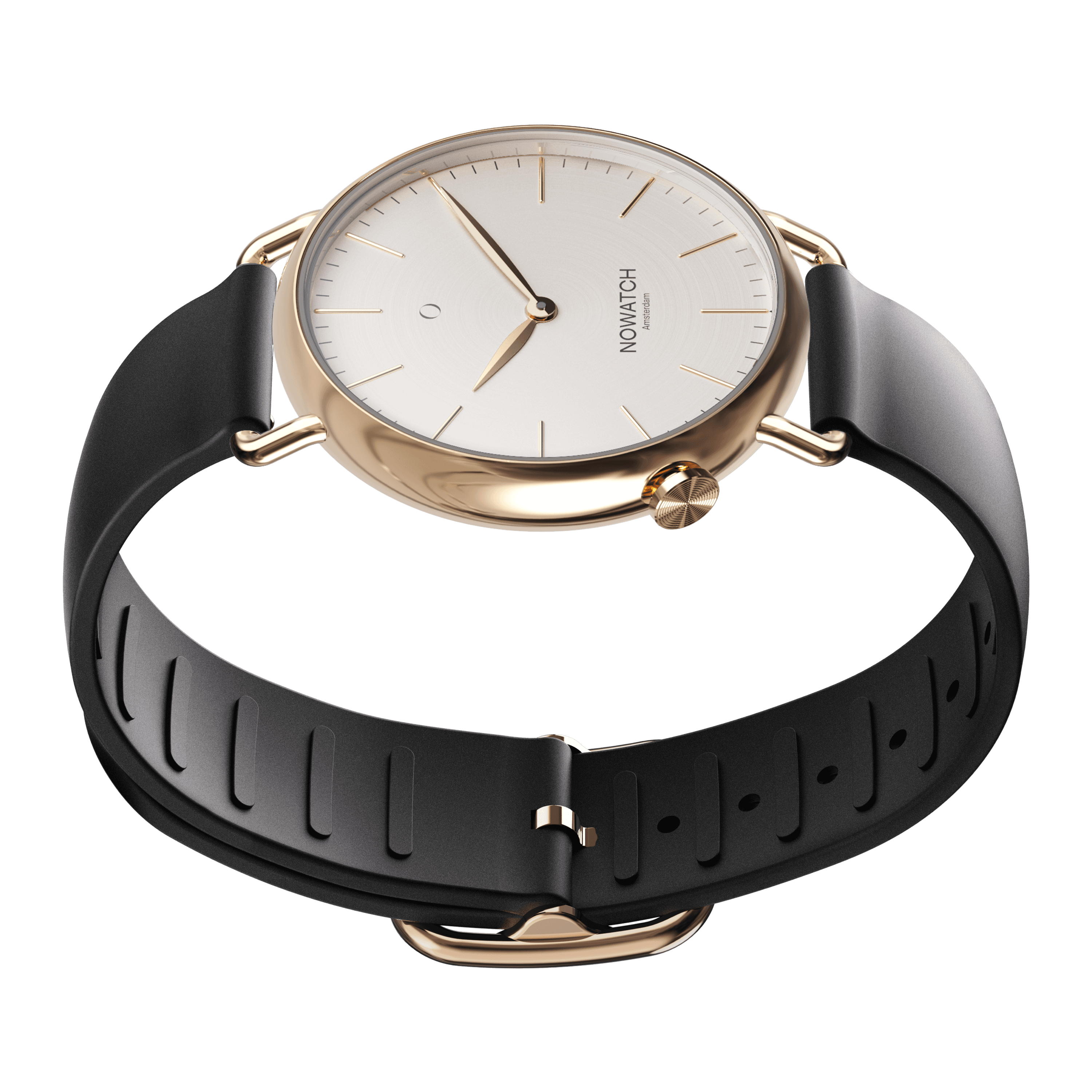
A health tracker should give you clarity about what’s going on in your body. So why does your morning check-in leave you anxious about your sleep score, lower-than-usual HRV, or that you’re “behind” on what other wearables call recovery?
Scores are built to make complex data quick to read, but quick isn’t the same as clear, and a single number can hide a lot of nuance.
A missed goal or an imperfect night isn’t a verdict on your health, yet too many wearables turn it into daily judgement: chase the score, protect the streak, make up yesterday’s “debt,” and start again tomorrow.
A tracker should help you notice patterns over time and understand what's influencing them, not pile on more things to worry about. Overreliance on scores can make you lose trust in yourself and obsess over the numbers, and that’s when tracking stops helping.
Here’s why your smartwatch might be doing more harm than good, and what Polsen does differently.
Three Ways Health Trackers Can Get in the Way
For the most part, the data itself isn’t the problem. The problems start when a complex, changeable human experience, like sleep or activity, is compressed into a score, target or warning.
Here are three ways things can go wrong.
1. Those Goals Aren’t Yours
A lot of the “benchmarks” wearable scores are based on aren’t grounded in real science. Take 10,000 steps: it’s become a near-universal daily goal, yet it originated as a marketing campaign for a Japanese pedometer in the 1960s. A 2025 meta-analysis points to a more attainable target: around 7,000 steps a day was linked to a 47% lower risk of all-cause mortality. But the bigger takeaway is that you don’t need to hit any magic number to benefit. Every additional 1,000 steps counted, and even modest increases made a real difference: (going from 2,000 to 4,000 steps a day was associated with a 36% lower risk of all-cause mortality).
The goal isn’t the only thing that’s arbitrary: so are the baselines. Wearables translate raw signals into scores using models drawn from exercise and health research, and that research has historically studied men far more than women, leaving women’s physiology closer to an afterthought than a baseline input.
2. One Bad Score Shouldn’t Ruin Your Day (Or Your Month)
Picture this: you wake up feeling reasonably okay. Then you check your sleep score: 52. Suddenly you’re scanning for tiredness, doubting your memory of the night, and wondering how you’ll get through the day. The score hasn’t changed how you slept, but it can change how you feel about it.
Comfort, everyday.
+5 days battery life+Reactivity Monitor™
In a controlled study of 63 people with insomnia, researchers gave participants either positive or negative sleep feedback that was unrelated to how they had actually slept. Those who received negative feedback later reported more sleepiness and fatigue, and poorer alertness, than those who received positive feedback.
This doesn’t mean sleep data always causes harm, but it shows why a bad score isn’t a neutral piece of information: it can influence how you feel about your own body. This is sometimes described as a nocebo effect: negative expectations, here triggered by a poor score, shaping symptoms or perceived wellbeing.”
For a small number of people, tracking can turn into orthosomnia: an excessive preoccupation with achieving “perfect” sleep, driven by tracker data. Estimates vary, but a 2024 population study found possible orthosomnia in 3% to 14% of wearable owners in its sample. That’s why Polsen asks you to rate your night before showing your sleep data.
But scores do more than shape how you feel after one night. When paired with targets, alerts and streaks, they can also change what happens after an imperfect week.
If you’ve ever been on a diet, you’ve probably felt this. Psychologists Janet Polivy and C. Peter Herman coined the term “what-the-hell effect” after finding that once dieters believe they’ve broken a rule (even a small one), they tend to quit. The more rigid the rule, the more a single slip reads as total failure rather than a minor deviation.
Streaks and goal-based scores run on the same principle. Break one, and the instinct is to give up on the whole thing.
Streaks assume that fear is a good enough motivator, and for a while, that works. But in the long-term, fear isn’t what builds new habits, and the constant pings just add more noise to a world already full of distractions. It’s hard to ignore the irony of a device meant to track your stress becoming a source of it.
Take sleep debt. It’s a real scientific concept, but turning it into a metric to chase can turn sleep into a source of anxiety. Using last night’s data to set tonight’s target can leave you feeling permanently behind, because no one with a normal life gets a “perfect” night, every night.
What a Tracker Built for Your Health (Not Your Obsession) Looks Like
The next evolution of health trackers is already underway; here are four ways Polsen watches focus on supporting your health, not gamifying it.
1. Trends, Not Verdicts
One low score is virtually meaningless. What matters is the long-term trend, because patterns over time build your personal baseline. When the numbers are based on your own body, it’s easier to spot what’s normal, what’s a deviation, and what’s worth paying attention to.
And when you can see where those patterns intersect, like lower HRV after several nights of poor sleep, it tells you something about how your body responds to sleep loss.
Polsen takes a mixed approach: we weight your recent history more heavily for an honest picture of your health, but still look across a longer, more telling window than just the last 24 hours.
It’s one of the ways we build non-addictive design into health tracking, so you’re not hooked on checking the app every day. Health is a marathon, not a sprint, and daily ebbs and flows are normal for a healthy system.
2. Inner Motivation, Not Fear of Failure
Inner motivation will always outlast the fear of breaking a streak. Rather than triggering anxiety or obsessive behaviour, the right tracker educates you, helping you notice the benefits of your habits over time, and actually feel them.
That’s what turns “I should do this” into “I want to do this”, because you’re not blindly following a rule; you’re learning why it works and how to keep making it work.
3. Your Body’s Timing, Not the App’s
Most apps deliver advice on a schedule that suits the app. Polsen watches respond to what’s actually happening in your body with features like Check-In Vibration, which lets you know when you’re showing early signs of stress and invites you to take action before they intensify. These are called “Just In Time Adaptive Interventions” (JITAIs).
These features make the advice from your smartwatch personal and sustainable. Good habits will only stick long-term if they make sense to you and adapt to your life. Eventually, you’re bound to quit anything that feels like a chore.
4. Clarity, Not More Data
Some wearables pride themselves on measuring more metrics, more often. But more data doesn’t automatically mean a clearer picture of your health.
Polsen only gives you the data that has been backed by science to be trackable via your wrist. Instead of encouraging users to view health through the lens of one or two scores, we focus on your stress response and load, because there’s strong evidence that how your body handles stress shapes your health.
Build Habits that Last a Lifetime with Polsen
You know the old saying: give a man a fish and he eats for a day; teach him to fish and he eats for a lifetime. We think of Polsen as the fishing rod of health tracking.
We’re not another tech company building devices designed to keep you hooked. We’ve built a tool meant to give you the skills, awareness, and confidence to read your own body, so that one day, you might not need us at all.